
If you have ever wanted to master a light, glossy, and stable topping for your desserts, the italian meringue recipe featuring egg whites and sugar syrup is your best friend. Perfect for cakes, pies, and even buttercreams, this method brings reliability and silky texture that wins over any crowd.
With just a few simple ingredients and some steady hands, you’ll whip up meringue that holds its shape and tastes delectably sweet. Let’s jump into making a dessert staple you’ll use again and again.
Why You’ll Love This Recipe
This Italian meringue recipe offers a perfect balance of fluffy texture and glossy finish that traditional meringues often miss.
- Stable and glossy texture that holds up well
- Less sweet and less grainy than other meringues
- Uses simple ingredients you likely have on hand
- Versatile topping for pies, cakes, and frostings
- Safe to eat due to cooked sugar syrup
My Experience Making This Recipe
Every time I make italian meringue, the cracking swirl of sugar boiling and whites whipping feels like a little kitchen celebration. The moment the hot syrup hits the beaten egg whites, the transformation feels almost magical—turning simple ingredients into silky, sturdy meringue.
Friends always admire the shiny peaks, sometimes wondering how I managed such a perfect texture. It never fails to impress and hold its shape without weeping, even hours after frosting a cake.
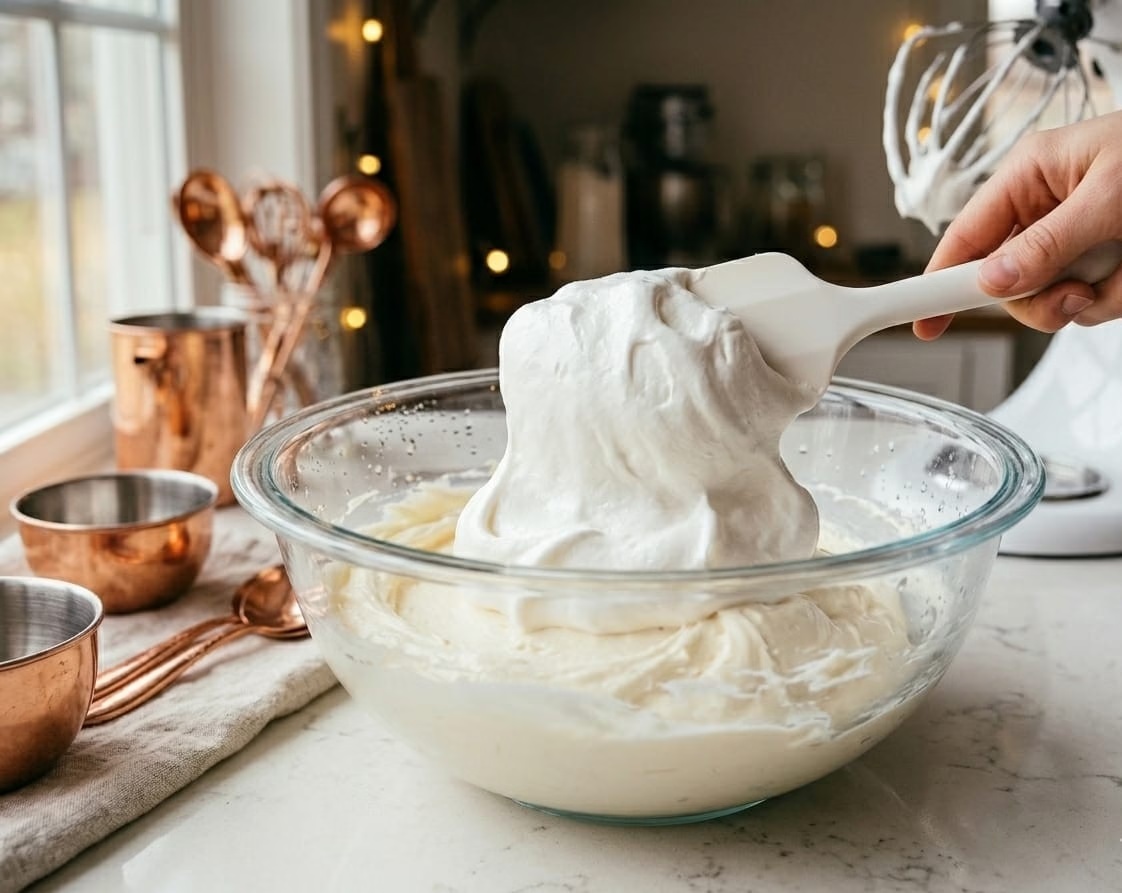
Italian Meringue Recipe
Ingredients
Equipment
Method
- Prepare Your IngredientsSet out your egg whites to reach room temperature for better volume. Measure sugar and water precisely for a perfect sugar syrup.
- Start Sugar SyrupCombine sugar and water in a saucepan and bring to a boil over medium heat. Insert a candy thermometer to monitor the temperature closely because this stage is key.
- Beat Egg WhitesWhile sugar syrup heats, start whisking egg whites with cream of tartar on medium speed until soft peaks form. This provides a stable base to incorporate the hot syrup without cooking the whites.
- Bring Syrup to Soft Ball StageHeat syrup to roughly 240°F (115°C), known as the soft ball stage, where syrup forms a sticky ball in cold water. This temperature ensures the sugar is properly cooked for a stable meringue.
- Slowly Pour Syrup Into Egg WhitesWith mixer running on medium, carefully drizzle the hot syrup down the side of the bowl to avoid splattering. This step cooks and sweetens the egg whites simultaneously, creating silky meringue.
- Increase Speed and WhipOnce all syrup is in, crank the speed to high and whip until the meringue cools and thickens into glossy, stiff peaks. Cooling is critical to lock in air and stabilise texture.
- Add FlavoringMix in vanilla extract or other flavorings gently to keep the peaks intact. This adds depth without compromising stability.
- Use or Store ImmediatelyUse the Italian meringue immediately for frosting or topping—or keep it covered at room temperature for a few hours. Note that prolonged standing may weaken the structure slightly.
Nutrition
Notes
Tips for the Best Italian Meringue Recipe
- Separate eggs while cold, but whip whites at room temperature for maximum volume.
- Do not rush the syrup temperature; candy thermometer accuracy is crucial.
- Pour syrup slowly and steadily to avoid cooking the whites too quickly.
- Whip until completely cool to hold stiff peaks and glossy shine.
- Avoid any yolk in egg whites as fat kills the foam.
- Use superfine sugar if possible, for faster and smoother dissolving.
Common Mistakes to Avoid When Making Italian Meringue Recipe
- Pouring syrup too hot or too fast ruins the texture by scrambling the egg whites.
- Skipping the candy thermometer leads to under- or overcooked syrup, affecting stability.
- Using a dirty bowl or beaters results in poor egg white volume.
- Beating the meringue before adding syrup creates unstable foam.
- Whipping for too short or too long can cause weeping or dry meringue.
Tried this recipe?
Let us know how it was!
Ingredient Notes and Substitutions
- Egg whites: Provide structure and volume; use pasteurized whites for safety if preferred.
- Sugar: Sweetens and stabilizes the meringue; you can substitute with superfine sugar for faster dissolving.
- Water: Dissolves sugar; no direct substitute but alternatives could change syrup consistency.
- Cream of tartar: Adds extra stability but is optional; lemon juice or vinegar can substitute in a pinch.
- Vanilla extract: Adds warm flavor; other extracts like almond or lemon zest can also work.
Serving Suggestions
This meringue is a brilliant topper that adds light sweetness and texture without overpowering your dessert.
- Spread over lemon meringue pies for a classic finish
- Use as frosting on coconut or carrot cakes
- Pipe onto cupcakes and torch for a toasted effect
- Fold into buttercream to lighten and add fluff
- Serve as a standalone scoop with fresh berries
Variations to Try for Italian meringue recipe
- Add citrus zest or extracts for a bright, fresh twist.
- Fold in finely chopped nuts for texture contrast.
- Swirl in melted chocolate for a marbled effect.
- Use different extracts like almond or rose for unique flavor profiles.
- Incorporate spices like cinnamon or cardamom to warm up the flavor.
Dietary Adaptations
- Gluten-free: Naturally gluten-free, no changes needed.
- Dairy-free: Recipe contains no dairy, so it is suitable as is.
- Vegan/vegetarian: Can substitute aquafaba (chickpea brine) for egg whites but syrup technique must be adjusted.
- Low-carb/keto: Replace sugar with powdered erythritol, but expect slight texture differences.
Storage for Italian meringue recipe
Refrigerator
Store in an airtight container at room temperature for up to 24 hours for best texture.
- Refrigeration may cause sweating and soften the meringue.
- Use wax paper between layers to prevent sticking.
Freezer
Freezing is not recommended as the texture will degrade upon thawing.
- Meringue tends to become rubbery or weep after freezing.
Reheating
Freshly made Italian meringue is best used immediately; reheating is unnecessary and can cause collapse.
- If lightly torched, allow to cool before serving for best appearance.
Frequently Asked Questions
Can I use regular sugar instead of superfine sugar?
Yes, but superfine sugar dissolves faster and provides a smoother texture with less grit.
Is it possible to make Italian meringue ahead of time?
You can prepare it a few hours ahead, but it is best fresh for maximum volume and stability.
How should I store leftover meringue?
Keep it covered at room temperature up to 24 hours; refrigeration may cause it to weep.
Why did my meringue weep or collapse?
Likely due to undercooked syrup or not whipping the meringue completely cooled.
Can I flavor Italian meringue other than vanilla?
Absolutely, extracts like almond, lemon, or even spices work well to personalise your meringue.
Final Thoughts
Making Italian meringue may seem fiddly, but once you get the rhythm, it becomes an easy, impressive trick to have. This glossy, fluffy topper can turn any dessert into a showstopper with minimal fuss.
Give it a try next time you want to wow someone or just treat yourself to a fluffy cloud of sweetness. You might end up smirking at how simple perfection really can be.